Malfunction&Detection
Phenomenon: The lens cannot be adjusted, one side direction fails, and there is a buzzing sound that does not move, which may be due to worm wear/motor carbon brush damage.
Test: Connect two pins directly to 12V, and if it can rotate in both directions, it means the motor body is normal. The problem lies in the switch/circuit/other issues.
Adaptation reference verification point
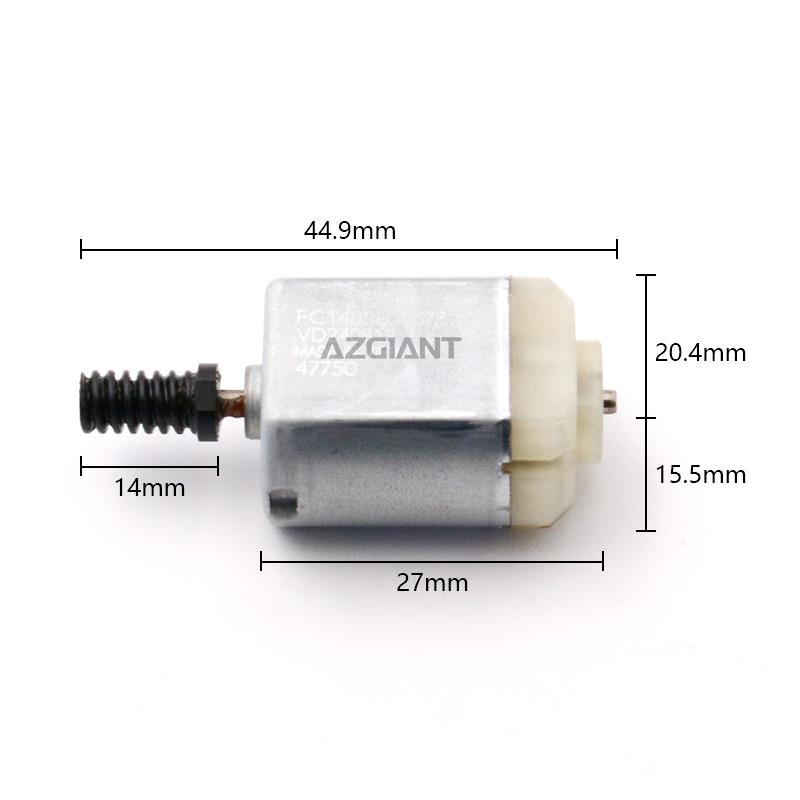
1. Look at the worm (screw), even if the motor casing is the same and the worm is different, it may not fit into the gear seat or slip.
2. The size of the motor body is divided into flat and round models, and the position of the slot determines whether it can be stuck in the gearbox.
3. Is there a built-in potentiometer (memory version)
Regular model: Pure DC motor, 2 leads, only responsible for forward and reverse rotation adjustment.
Memory model: motor integrated potentiometer, 3/4 lead, feedback position signal to the vehicle computer, supports memory and reverse flip.
4. Rotation direction/polarity (LH/RH specific motor), with a dedicated reverse motor, direct replacement may result in reversed adjustment direction (up to down, left to right).
Quick comparison (receiving sampling/checking products)
1. Disassemble the original car assembly, remove the small motor, and take three pictures: close-up of the worm gear, motor positioning, and lead wire end.
2. Comparison of new motors: worm gear profile, positioning ring, slot gap, whether equipped with potentiometer.
3. Power on naked test: Use 12V power to check the direction of rotation (to determine if the motor is reversing).
4. Install the original gearbox for trial installation: The worm gear must mesh smoothly without any jamming.

Genuine guarantee
Original丨Non-destructive straight mounting
Self-supporting storage
Global Warehousing丨Faster transportation
Insurance protection
Goods logistics fully insured
Worry-Free Return
Seven-day quality problem refund